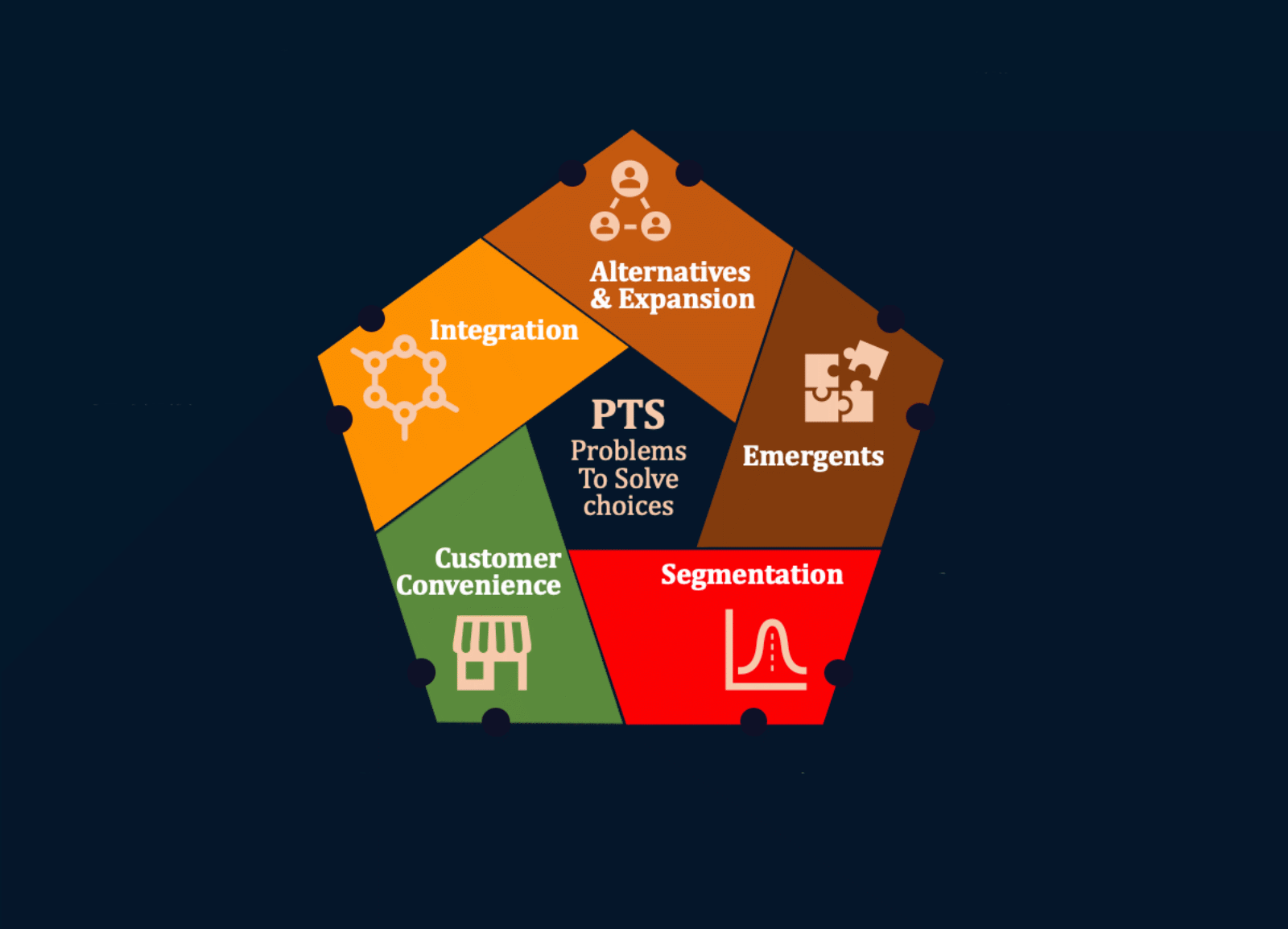
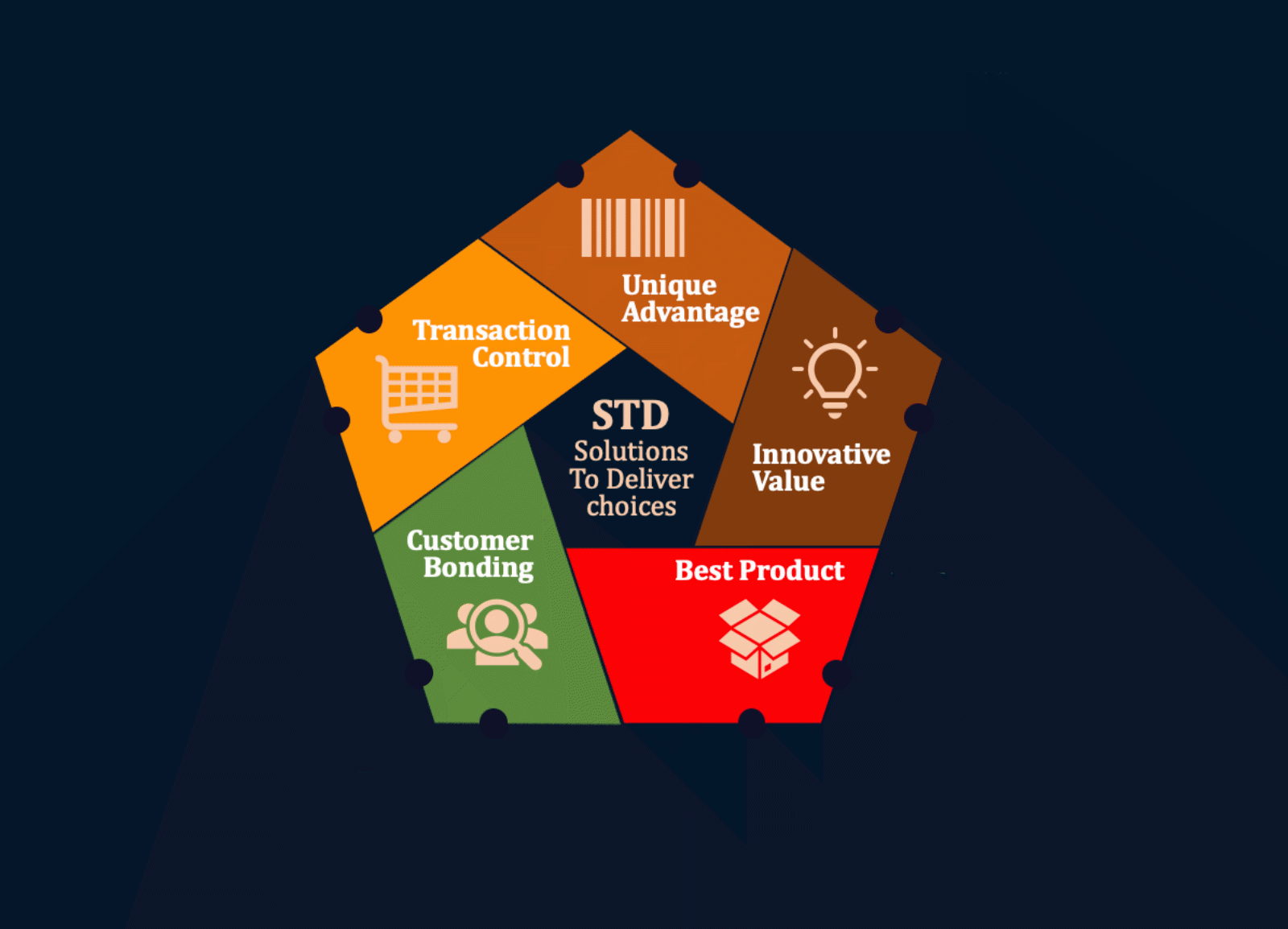
(A) Segmentation
A1 Niche Focus
Serve customers whose needs are so specific that a focused offer can serve them better than any generalist. The niche can be defined by the need itself, by its context, or by the fast-growing segments where those needs change the quickest.
Specialized niche of customer needs + context
Focus on niche market segments of specific customer needs and associated context.
Examples: Head & Shoulders, Decathlon, Cisco Networking, Caterpillar
Specific needs of the fastest-growing customers
Focus on the rapidly-evolving needs of the fastest-growing customer segments in the market.
Examples: Duolingo Gamification, Hims & Hers Health, Nubank, Scale AI, Stripe, Mercury
A2 Market Edges
Position at the extreme edges of the market. At the top, serve buyers who pay a premium for the very best; at the bottom, serve the long tail of many small-ticket buyers who need easy to reach, commodity solutions.
Exceptional needs of the top-tier or vanity customers
Focus on the exceptional needs of high-end, vanity, or luxury customers who require best products or services.
Examples: Ferrari, Aston Martin, Louis Vuitton, Gucci, Shangri-La, Ritz-Carlton, Sandals
Commodity needs of the bottom-tier customers
Focus on the commodity market needs of many low-ticket customers (Long-Tail / Bottom-of-the-Pyramid).
Examples: Coca-Cola, Pepsico, Gillette, Nestlé, Unilever
(B) Customer Convenience
B1 Proximity
Make the solution easy to reach. Physical proximity puts the offer close to customers, at the point of sale or delivered to them; virtual proximity makes every touchpoint available online, instantly and accessible from everywhere.
Needs addressed in close customer proximity
Focus on the needs of customers who can easily reach the physical or retail locations of the distribution network.
Examples: Carrefour Market, McDonald's, Starbucks, Target
Needs requiring full & ubiquitous remote access
Focus on customers who require full, instant, digital access to products or services, with fulfillment services for products.
Examples: Webex, Yahoo Finance, Spotify, Netflix, Amazon
B2 Sales Chain
Decide how directly you reach the customer. Reach customers through direct contact or official representatives rather than serve them through intermediaries like dealers or distributors, or extend your reach more customers through indirect or retail channels.
Indirect customer needs addressed directly
Focus on the sales channel, aiming to directly reach customers to whom sales are made indirectly.
Examples: Nike, Apple, Samsung, Tesla, LEGO, Cisco
Remote customer needs addressed via proxy
Focus on the sales channel, aiming to reach more customers via indirect distribution channels.
Examples: Domino’s, Planet Fitness, SAP, Salesforce, Stihl
(C) Integration
C1 Value Stream
Move along the value stream to cover more of the customer's chain of needs. Integrating upstream or downstream lets customers buy from a vertically integrated supplier, and multiplies the types of customers served.
Needs addressed by upstream integration
Extend business upstream, for better vertical integration and new customers needs targeting.
Examples: Apple, Tesla, IKEA, Delta Air Lines, Netflix, Sony
Needs addressed by downstream integration
Extend business upstream, for better vertical integration and new customers needs targeting.
Examples: Disney+, Luxottica, Apple Pay, PlayStation Store
C2 Adjacents
Extend to the needs next to the ones you already address. Become a one-stop shop that captures a larger share of existing customers' wallets, or defend against disruption by addressing the needs of your less demanding customers.
Address other needs of the existing customers
Focus on other needs of existing customers and get a bigger share of their wallet.
Examples: Coca-Cola | Costa Coffee, Pepsico | Lays, Microsoft | XBox, Uber | Eats
Defend the needs of less demanding customers
Address reactively the needs of less demanding existing customers targeted by Disruptive Innovation.
Examples: Lufthansa | Eurowings, Quantas | Jetstar, Marriott | Homes & Villas, PlayStation | Aniplex
(D) Alternatives & Expansion
D1 Substitutes
Meet needs in new markets by substituting a different way of satisfying them: adapt your existing products, or adapt solutions that already work in other markets.
Separate needs that are addressed together
Address the needs of customers in new markets that can be satisfied by adapted versions of existing products.
Examples: Honeywell | Intelligrated, Square | Square for Education, DJI | DJI Agras
Needs addressed same as those in other markets
Address the needs of customers in new markets by adapting products or solutions from other markets.
Examples: Vodafone M-Pesa Payments, Apple Deep Fusion, ForeFlight, Outfront ON Smart Media
D2 New Geographies
Take your solution to new territories. Localize products and services to highly specific local needs, and build the local sales channels and partnerships that make them available.
Localize and address highly-specific local needs
Focus on highly-specific needs of customers in new territories by localizing the products or services.
Examples: Caterpillar, Toyota, Nestlé, KFC, DHL Express, Unilever
Expand sales channels & target local market needs
Focus on serving the needs of customers in new territories by developing local sales channels and distribution partnerships.
Examples: Apple & local Telco carriers, Red Bull, Salesforce & local integrators, John Deere, Nike
(E) Emergents
E1 Trend Markets
Follow needs that are emerging in the market. Serve over-served marginal customers with simpler, more accessible and more affordable solutions, or serve the early adopters of an emerging market as an early mover or fast follower. This is the market side of Disruptive Innovation.
Address over-served marginal customers needs
Focus on overserved needs of marginal customers requiring more simplicity, accessibility, and affordability.
Examples: Ryanair, Southwest Airlines, Square POS, Canva, Flexport, Airbnb, Uber, Coursera, Robinhood
Address emerging needs of the early adopters
Focus on serving the needs of early-adopters in emerging markets, acting as early movers or fast followers.
Examples: Vodafone M-Pesa, Starlink, Enphase Energy, CoreWave GPU Cloud, Butterfly Healthcare
E2 New Markets
Create markets that do not exist yet. Combine existing needs in novel ways, or address needs that people were unaware of until new technology made them relevant. This is the market side of the Blue Ocean Strategy theory.
Imagine a novel way to combine existing needs
Focus on serving novel combinations of needs that non-consumers recognize as relevant for them.
Examples: Cirque du Soleil, Nintendo Wii, Pokémon GO, citizenM, Liquid Wind eMethanol
Emerging needs born from new use of technology
Focus on needs of non-customers that they were unaware of before, but recognize as relevant for them.
Examples: Novo Nordisk NovoPen, Stitch Fix, Ring Security System, Deel Employer of Record, Popchip